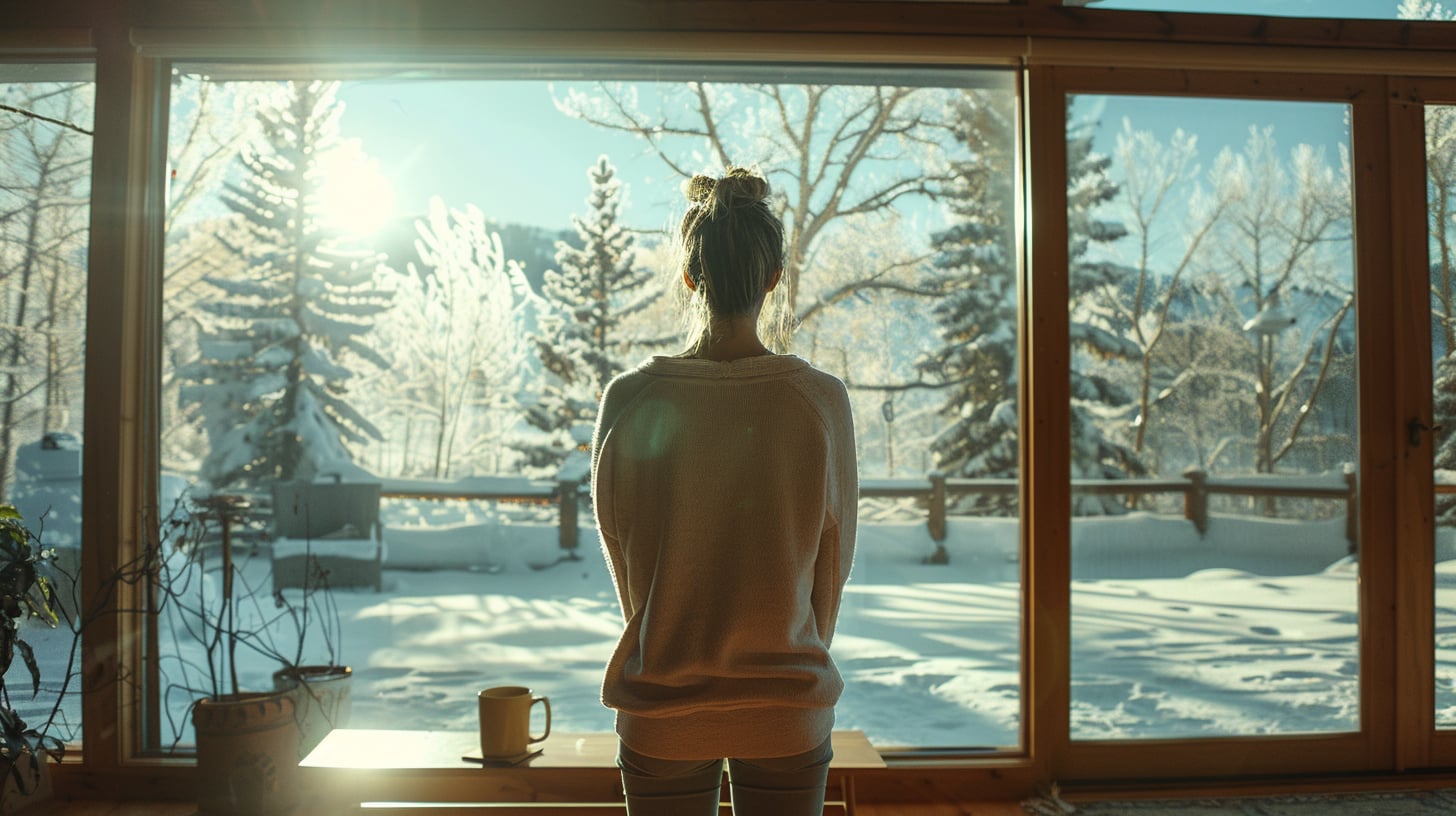
Seasonal Affective Disorder Treatment in Denver
If every fall the lights go down and so do you — low energy, oversleeping, withdrawing until spring — that's not a personal failing or a lack of willpower. It's seasonal depression, it's treatable, and CBT-SAD builds skills that last beyond this winter.
What Is Seasonal Affective Disorder?
Seasonal affective disorder (SAD) is depression with a seasonal pattern — in the DSM-5 it's a major depressive episode that recurs at the same time each year, most often beginning in fall or winter and lifting in spring. It's driven largely by the drop in daylight: shorter days disrupt circadian rhythm and the brain chemistry that regulates mood and energy.
It's more than disliking winter. SAD brings the full weight of depression — but on a schedule, which is also its silver lining: because it's predictable, you can get ahead of it. (A rarer summer-pattern SAD exists too, with the opposite profile — insomnia and appetite loss.)
Signs of Winter-Pattern SAD
If these show up reliably each fall/winter and ease in spring, a seasonal pattern is likely.
- Low mood that returns the same time each year — usually fall and winter
- Low energy and fatigue, even after plenty of sleep
- Sleeping more than usual (hypersomnia), hard to get up
- Cravings for carbs and sugar; weight gain over winter
- Loss of interest in activities you enjoy the rest of the year
- Social withdrawal — “hibernating”
- Trouble concentrating; a heavy, sluggish feeling
- Symptoms lift on their own in spring — then return next fall
If winter low mood ever brings thoughts of not wanting to be here, you don't have to wait — call or text 988 any time, and reach out to us when you're ready.
How We Treat SAD
The first-line psychological treatment is CBT-SAD, a seasonal-specific cognitive-behavioral protocol — paired, where it fits, with light-therapy guidance. Here's what the work involves.
CBT for SAD (CBT-SAD)
A seasonal-specific cognitive-behavioral protocol: identifying the winter-linked thoughts and the activity collapse that deepen the low, and rebuilding engagement before the season takes hold.
Behavioral activation
Winter SAD pulls you toward hibernation — less light, less movement, less connection. Scheduling pleasant and meaningful activity directly counters the withdrawal that fuels the mood drop.
Cognitive restructuring
Targets the seasonal thought patterns — “winter always wrecks me,” “there's no point until spring” — that turn a biological dip into a full depressive episode.
Light therapy guidance
Bright-light therapy (typically 10,000 lux, mornings) has good evidence for SAD. We help you use it correctly as an adjunct — timing, dose, and what to pair it with — rather than relying on it alone.
Relapse prevention & timing
Because SAD is predictable, we can get ahead of it — starting before symptoms peak and building a seasonal plan you reuse every year.
Why CBT-SAD, Not Just a Light Box
Light therapy is the treatment most people have heard of, and it genuinely helps — bright morning light eases SAD for many. But it has a catch: the benefit tends to depend on keeping it up, and when the device goes back in the closet, symptoms often return the next winter. It treats the season; it doesn't teach you anything.
CBT-SAD does. By targeting the winter activity-collapse and the seasonal thought patterns that turn a biological dip into a full episode, it builds skills you keep — and the research (Rohan et al.) suggests those gains hold up better across future winters than light therapy alone. The strongest approach for most people is both: light therapy for the immediate lift, CBT-SAD for the durable change. That combination is what we build with you.
What Treatment Looks Like
Structured, practical, and ideally started before the hardest months.
Map Your Pattern
We pin down your seasonal timing, symptoms, and the activity-and-thought spiral that shows up each winter — and set a baseline.
Get Ahead of It
Because SAD is predictable, we build your plan proactively — ideally before the worst months — including light-therapy guidance where it fits.
CBT-SAD Core Work
Behavioral activation and cognitive restructuring counter the winter withdrawal and the seasonal thinking that deepen the low.
Skills for Every Winter
You leave with a reusable seasonal playbook — the durability advantage of CBT-SAD over light therapy alone.
What the Research Shows
SAD is well-studied, and the durability difference between approaches is the headline.
CBT-SAD showed more lasting benefit across future winters than light therapy alone (Rohan et al.)
both CBT-SAD and bright-light therapy significantly reduce seasonal depression
because SAD is predictable, getting ahead of the season can blunt or prevent the episode
light therapy + CBT-SAD combines an immediate lift with lasting skills
The research behind SAD treatment
- Rohan KJ, et al. (2015). Randomized trial of CBT vs. light therapy for winter depression: acute outcomes and two-winter follow-up. American Journal of Psychiatry.
- Rohan KJ, et al. Cognitive-behavioral therapy for seasonal affective disorder (CBT-SAD) — treatment manual and outcome studies.
- Golden RN, et al. (2005). The efficacy of light therapy in mood disorders: a review and meta-analysis. American Journal of Psychiatry.
- American Psychiatric Association — DSM-5 “with seasonal pattern” specifier for recurrent major depression.
What to Expect at FRTC
We offer both in-person and online treatment from our center in Denver. We start by mapping your seasonal pattern — timing, symptoms, and the winter spiral of less light, less activity, lower mood — and set a baseline. If you're coming to us in fall or winter already in it, we move quickly on relief; if you're planning ahead, even better.
From there it's the CBT-SAD core work — behavioral activation and cognitive restructuring — plus practical light-therapy guidance where it fits. You'll leave with a seasonal playbook you can reuse every year, which is the whole point: not just surviving this winter, but knowing how to handle the next one.
Is This Right for You?
If your mood, energy, and motivation reliably sink with the shorter days — and come back in spring — and it's costing you more than a few grumbles about the cold, this is the right fit. You don't need a formal diagnosis, and you don't need to wait until you're at your lowest to start.
If your depression isn't seasonal, our broader depression treatment and CBT for depression pages are the better starting point.
Why Choose FRTC?
Front Range Treatment Center is a DBT-Linehan Board of Certification, Certified Program™ — a mark of clinical excellence rare in Denver. Our clinicians are trained in the structured, evidence-based protocols seasonal depression responds to, including the seasonal-specific CBT-SAD approach and correct use of light therapy.
We offer both CBT and DBT under one roof, so if SAD is layered on top of other depression or anxiety, we can treat the whole picture without sending you elsewhere.

“Light therapy treats the winter. CBT-SAD treats the way you meet every winter — which is why the skills are still working long after the box is back in the closet.”
Frequently Asked Questions
Is this just the “winter blues,” or actually SAD?
Lots of people feel a little flatter in winter. Seasonal affective disorder is when that becomes a full depressive episode — low mood, heavy fatigue, oversleeping, carb cravings, withdrawal — that recurs the same time each year and lifts in spring. If winter reliably knocks you down for weeks, it's worth treating rather than just waiting for the thaw.
Does Colorado sunshine mean I can't have SAD?
No — and it's a common assumption. Even with Colorado's famous sunny days, winter brings far shorter daylight, earlier darkness, and a lot more time indoors, all of which can trigger SAD. Plenty of Coloradans deal with it.
Do I need a light box — and does light therapy work?
Bright-light therapy (usually 10,000 lux in the morning) has solid evidence for SAD and helps many people. But used alone, the benefit often fades when you stop, and symptoms tend to return the next winter. We help you use light therapy correctly as one tool, paired with CBT-SAD — which teaches skills that carry from one winter to the next.
CBT or light therapy — which is better?
Both work, and they pair well. The notable finding is durability: research (Rohan et al.) suggests CBT-SAD produces more lasting results across future winters than light therapy alone, because you learn transferable skills rather than depending on a device. We'll build the combination that fits you.
When should I start — can I prevent it?
Ideally before your symptoms usually peak — late summer or early fall if you know winter is hard for you. Because SAD is so predictable, getting ahead of it is one of the biggest advantages you have, and a seasonal plan can blunt or prevent the episode.
Can I do this online?
Yes — we offer secure, HIPAA-compliant teletherapy across Colorado, which is especially handy when winter is exactly when leaving the house feels hardest.
Related Services
SAD is one pattern of depression among several. Start with the depression treatment overview, or CBT for depression for year-round low mood. When depression comes with emotional overwhelm, DBT for depression may help, and winter often brings anxiety along with it.



Don't Wait for Spring
If winter takes you down every year, this is the year to build a plan that lasts. Reach out for a free consultation.