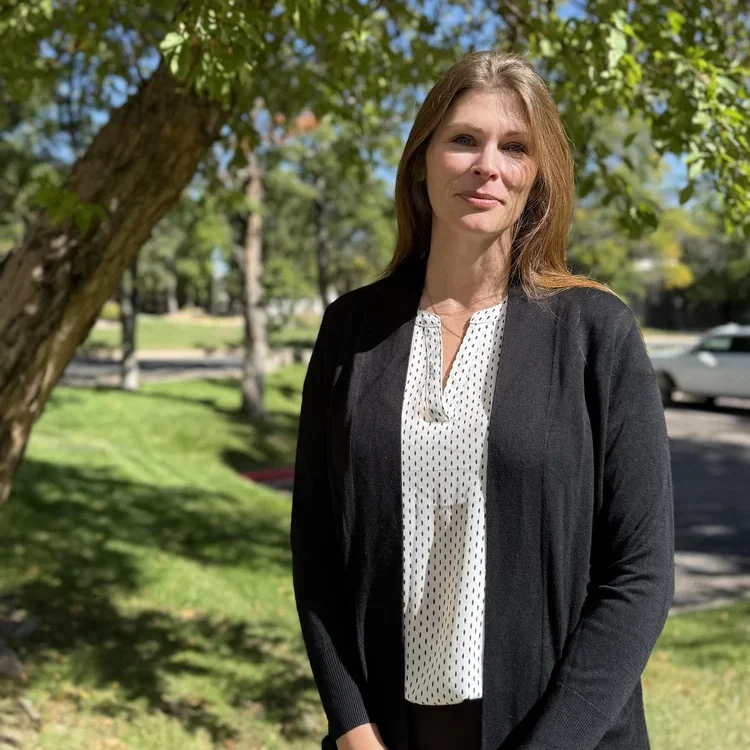
About Emily Warner
Emily Warner is a Licensed Professional Counselor Candidate (LPCC) in Colorado. She earned her Master of Arts in Clinical Mental Health Counseling from the University of Northern Colorado, and at FRTC she works with teens and adults as a DBT/CBT therapist, leading DBT skills classes and providing individual therapy.
Emily came to counseling after a first career in law and health policy. She earned her J.D. from Georgetown University Law Center, and her early legal work centered on mental health advocacy: protecting the rights of older adults living with mental illness in New York, researching mental health systems and disability benefits at the Bazelon Center for Mental Health Law, and representing clients with disabilities as a student attorney. She went on to work in national health policy, focused on access to palliative care for people with serious illness, and later in health care contracting in Colorado. Years before that, her first clinical role was as a counselor in a residential treatment program for adolescent girls.
During her counseling internship at People House in Denver, Emily provided individual therapy in person and by telehealth to clients working through anxiety, depression, substance use, ADHD, trauma, and major life transitions. She also designed and co-led an in-person group for people living with chronic pain. Her additional training includes an intensive DBT training, Acceptance and Commitment Therapy (ACT) for depression and anxiety, Emotionally Focused Therapy, Pain Reprocessing Therapy, complex trauma treatment with Janina Fisher, and an advanced course in ADHD.
Emily's approach is warm, compassionate, and non-judgmental. In individual therapy she draws on DBT and CBT, which look at emotions, thoughts, and behavior together, to help clients understand what keeps them stuck and practice new ways of responding. She also has a background in teaching, from English-language classes to youth theatre, and she brings that experience to her DBT skills classes, where clients learn skills in the room and practice them in their everyday lives.
At FRTC, Emily works with teens (13 and up) and adults facing overwhelming emotions, relationship difficulties, anxiety, and substance use. She leads DBT skills classes and provides individual therapy tailored to each client's goals.