In this article
- Why Specialization Matters
- The Risks of Non-Specialized Treatment
- What to Look For
- DBT Training and Experience
- Comprehensive DBT vs. “DBT-Informed”
- Attitude Toward BPD
- Willingness to Do the Hard Work
- Understanding of the Treatment Timeline
- Questions to Ask
- The Denver Landscape
- Beyond DBT
- Taking the First Step
- Related Reading
Finding the right therapist for Borderline Personality Disorder isn’t like finding a therapist for general stress or mild anxiety. BPD is a complex condition that requires specific expertise, and the difference between a therapist who specializes in BPD and one who merely accepts BPD clients can be the difference between meaningful recovery and years of ineffective treatment.
If you’re searching for BPD treatment in Denver, this guide will help you ask the right questions and evaluate your options.
Why Specialization Matters
BPD has historically been one of the most misunderstood and stigmatized conditions in mental health. Many therapists received little or no training in BPD during their graduate programs, and some still hold outdated beliefs about the condition — that it’s untreatable, that people with BPD are manipulative, or that therapy can’t help.
The reality is that BPD responds well to evidence-based treatment, particularly Dialectical Behavior Therapy (DBT). Research shows that most people with BPD who complete a comprehensive DBT program experience significant reduction in self-harm, suicidal behavior, emotional dysregulation, and interpersonal conflict. Many no longer meet diagnostic criteria after treatment.
But these outcomes come from specialized treatment, not general therapy with a therapist who happens to list BPD on their website. The difference between a BPD specialist and a general therapist treating BPD is comparable to the difference between a cardiologist and a general practitioner treating heart disease — both are competent clinicians, but the specialist has the depth of training and experience that complex conditions require.
The Risks of Non-Specialized Treatment
What happens when someone with BPD receives treatment from a therapist who isn’t specialized? Several patterns emerge frequently:
Misdiagnosis. BPD shares symptoms with bipolar disorder, major depression, PTSD, and ADHD. Without specific training, clinicians often land on a more familiar diagnosis. The treatment for bipolar disorder is fundamentally different from the treatment for BPD, and misdiagnosis means years of medication adjustments and therapy approaches that never quite address the core problem.
Iatrogenic harm. Some therapeutic approaches can actually worsen BPD symptoms if applied without understanding of the condition. A purely insight-oriented approach that explores childhood trauma without building distress tolerance skills first can destabilize someone who already struggles with emotion regulation. A confrontational approach can replicate the invalidating experiences that contributed to the disorder.
Therapist burnout and termination. BPD involves intense interpersonal patterns that play out in the therapeutic relationship itself. Without proper training and the support of a consultation team, therapists can become overwhelmed, frustrated, or burned out — and the client gets terminated or referred out, reinforcing their belief that they’re “too much” for anyone to handle.
Reinforcement of ineffective patterns. A therapist who doesn’t understand BPD dynamics may inadvertently reinforce the very patterns that cause problems — for instance, providing excessive reassurance that feeds reassurance-seeking behavior, or avoiding difficult topics to prevent emotional escalation.
What to Look For
DBT Training and Experience
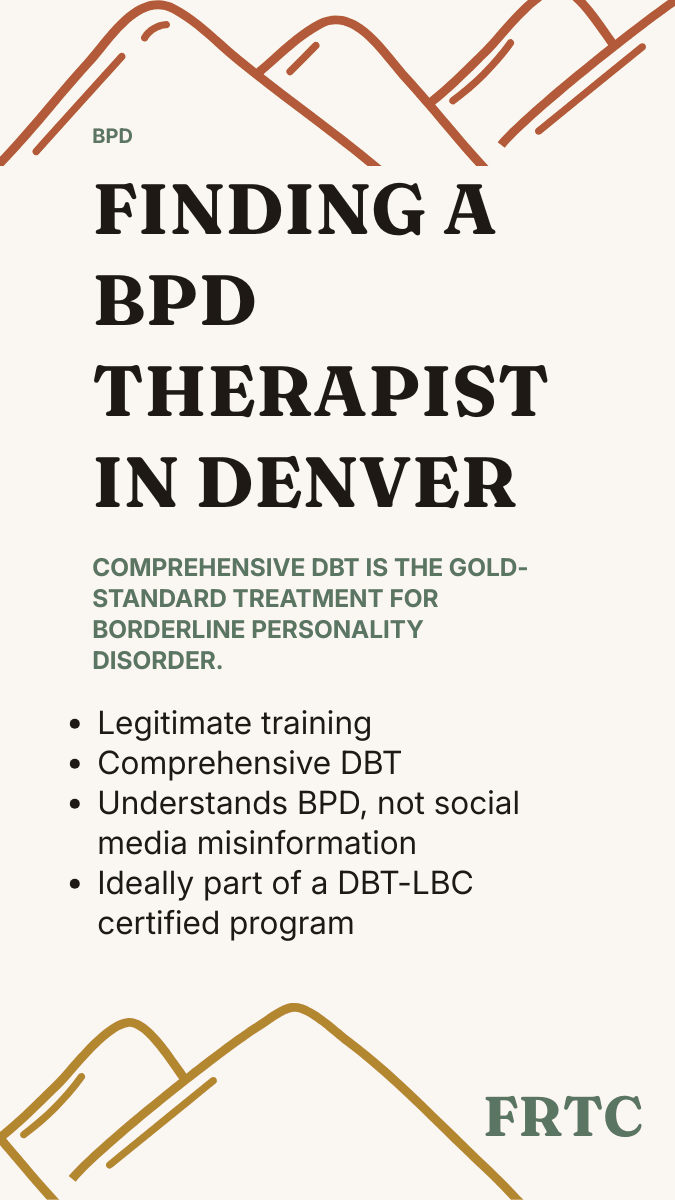
DBT is the gold standard treatment for BPD. Look for therapists who have completed intensive DBT training — ideally through Behavioral Tech or an equivalent program — not just a weekend workshop or online course.
Ask specifically: “What DBT training have you completed?” and “How many BPD clients have you worked with?” Experience matters. BPD presents complex challenges that a newly trained therapist may not be prepared for.
Comprehensive DBT vs. “DBT-Informed”
A therapist who uses “some DBT techniques” or describes their approach as “DBT-informed” is not delivering the same treatment as a comprehensive DBT program. Comprehensive DBT includes all four modes: individual therapy, skills groups, phone coaching, and a consultation team.
If you’re dealing with significant BPD symptoms — especially self-harm, suicidal ideation, or severe emotional dysregulation — comprehensive DBT is what the research supports. A certified program provides the highest level of assurance that you’re receiving the full model.
Attitude Toward BPD
Pay attention to how a potential therapist talks about BPD. Do they speak about the condition with understanding and respect? Or do you detect frustration, dismissiveness, or subtle stigma?
A good BPD therapist understands the biosocial model — that BPD arises from the interaction between biological emotional sensitivity and environmental factors, not from character flaws. They approach clients with warmth and genuine belief in their capacity for change.
Willingness to Do the Hard Work
Treating BPD effectively requires a therapist who can tolerate emotional intensity, manage crisis contact, and maintain consistent boundaries without becoming cold or punitive. It’s demanding work, and not every therapist is suited for it. The consultation team in comprehensive DBT exists specifically to support therapists through this — providing accountability, preventing burnout, and ensuring that the therapist’s own emotional reactions don’t derail treatment.
Understanding of the Treatment Timeline
BPD treatment is not a quick fix. Comprehensive DBT typically takes about a year, and meaningful change happens gradually. A good BPD therapist will set realistic expectations — neither promising immediate results nor suggesting that recovery isn’t possible. They’ll help you understand the natural trajectory of BPD and where treatment fits within that bigger picture.
Questions to Ask
When evaluating a potential therapist or program, these questions cut through the marketing:
- “Do you offer comprehensive DBT with all four modes?”
- “What is your training background in DBT and BPD treatment?”
- “Are you DBT-LBC certified, or is your program certified?”
- “How do you handle crisis contact between sessions?”
- “What outcomes have your BPD clients typically experienced?”
- “How do you involve family members in treatment?”
A confident, competent BPD therapist will answer these questions directly and without defensiveness.
The Denver Landscape
Denver has a growing number of therapists who list DBT and BPD as specialties on directories like Psychology Today. However, relatively few actually offer comprehensive DBT with all four modes. The Denver metro area has many talented therapists, but the infrastructure required for a comprehensive DBT program — multiple trained clinicians, weekly skills groups, phone coaching coverage, and a functioning consultation team — limits the number of programs that deliver the full model.
When evaluating options, verify that the program includes a skills training group (not just individual therapy), phone coaching, and a consultation team. If a program only offers individual therapy with “some DBT techniques,” that’s DBT-informed therapy — which may be helpful but isn’t the same thing.
At Front Range Treatment Center, BPD treatment is our core specialty. We’re a DBT-Linehan Board Certified program — one of the few in Colorado — meaning our program meets the highest standards established by DBT’s creator. Our therapists are intensively trained, our consultation team meets weekly, and we deliver all four modes of comprehensive DBT.
Beyond DBT
While DBT is the most researched treatment for BPD, it’s not the only evidence-based option. Other approaches with research support include Mentalization-Based Treatment (MBT), Transference-Focused Psychotherapy (TFP), and Schema Therapy. If DBT isn’t available or isn’t the right fit, these are legitimate alternatives worth exploring.
That said, DBT has the most extensive evidence base for BPD and is the most widely available specialized treatment. For most people seeking BPD treatment in Denver, starting with a comprehensive DBT evaluation makes sense.
Taking the First Step
If you suspect you have BPD or have been diagnosed, seeking specialized treatment is one of the most important decisions you can make. The condition is treatable, recovery is common, and the right therapist makes all the difference.
The process of finding the right therapist can feel overwhelming, especially if you’ve had negative experiences with therapy in the past. Many people with BPD have been through multiple therapists before finding one who understands their condition — and each unsuccessful experience can erode hope. If this is your experience, know that it reflects a gap in the system, not a flaw in you. The right treatment with the right provider produces genuinely different results.
Most DBT programs offer initial consultations — typically free and designed to help both you and the provider assess whether the program is a good fit. Use that conversation to ask the questions listed above, to get a sense of the therapist’s attitude toward BPD, and to gauge whether you feel respected and understood. You deserve a therapist who genuinely believes in your capacity for change and has the training and structure to help you get there.
If you’re a family member or partner looking for treatment for someone you love, the same principles apply. Look for programs that also offer family involvement as part of treatment — recovery doesn’t happen in isolation.
Related Reading
Also treating BPD?
FRTC programs related to this article.
Need Support?
Our team specializes in evidence-based DBT and CBT therapy. Reach out for a free consultation.